
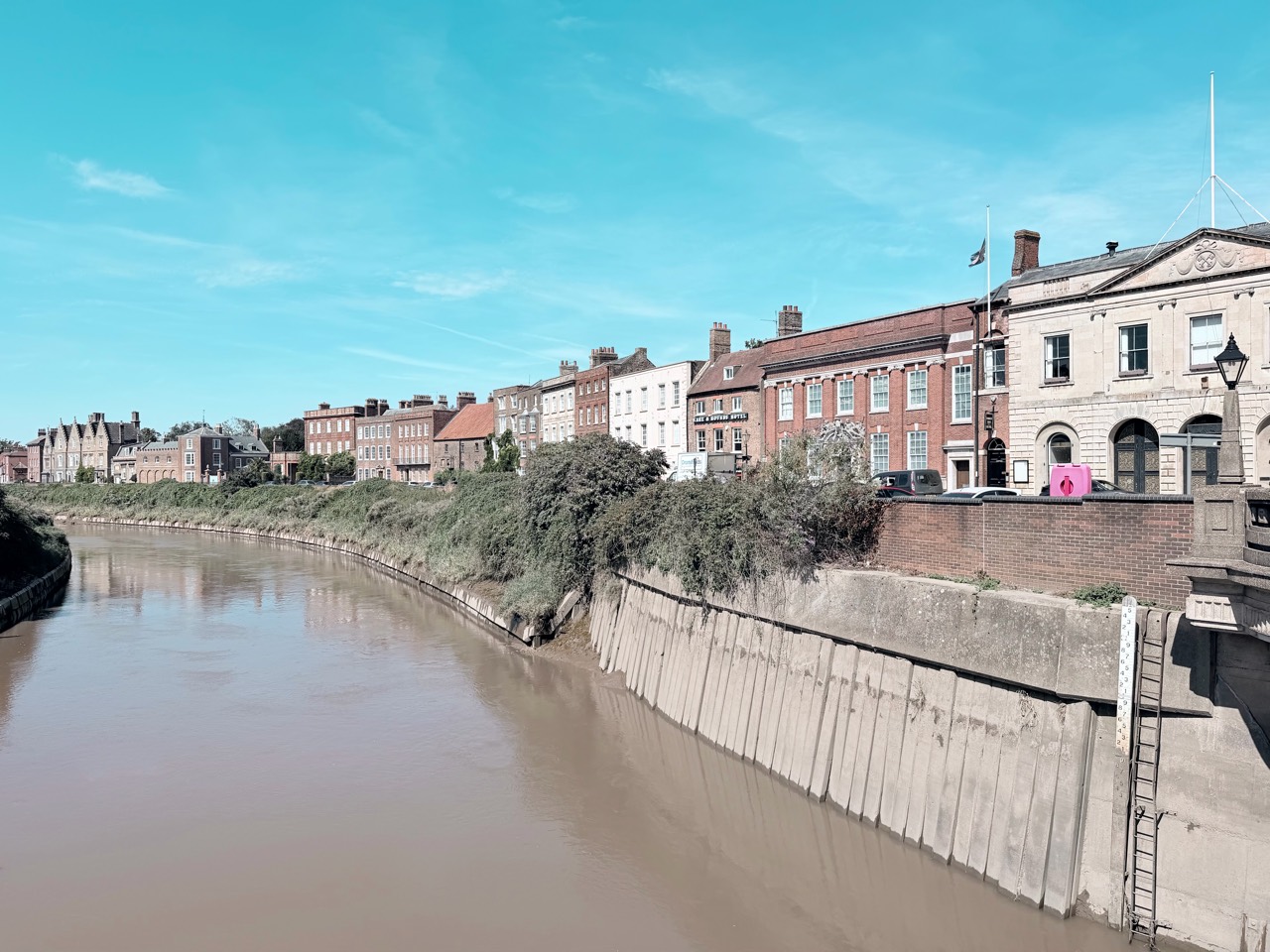
From across the water, the town reads as a single frontage. Up close it is a collection of different ages, materials and ambitions, each building adjusting itself to the same difficult ground.
Why it matters
The river sets the line. The bank, wall, road and buildings build out from it in layers. Architecture here is never quite separate from civil engineering, drainage or maintenance. Even the grandest façade depends on the practical work below it.
Current thinking
That is useful. It reminds us that character is rarely produced by appearance alone. It comes from many ordinary decisions accumulating around a real constraint.
What we tested
The street presents civic confidence: brick, stone, tall windows, parapets and signs. Behind it, long plots and piecemeal additions accommodate servicing, storage and change. The public face and the working depth are different architectures, but both are necessary.
What happened
None of this requires architectural theatre. The intelligence is in adjustment: a threshold lifted, a wall retained, a narrow plot stretched, a useful structure kept. These are modest moves, but together they make the town inhabitable.
What travels
Perhaps the lesson is not to preserve an image of the town, but to understand the adaptations that have allowed it to remain useful.